Reporting and commentary on mental health, prevention and accountability across Canada’s first-responder and public safety community.
Feature story · October 12, 2026
Police Leadership Must Protect the People Delivering Public Safety
Police performance cannot be measured only by calls answered, arrests made or files cleared. Leadership must also be judged by the working conditions it creates and the avoidable harm it prevents.
When Force Is Justified but Conduct Is Questioned: What Police Oversight Must Get Right
A recent Alberta decision shows why justified force, scrutiny of conduct and a decision not to prosecute can coexist—and why credible oversight must also be timely and fair.
When 99% of Paramedics Vote to Strike, This Is No Longer Just a Labour Dispute
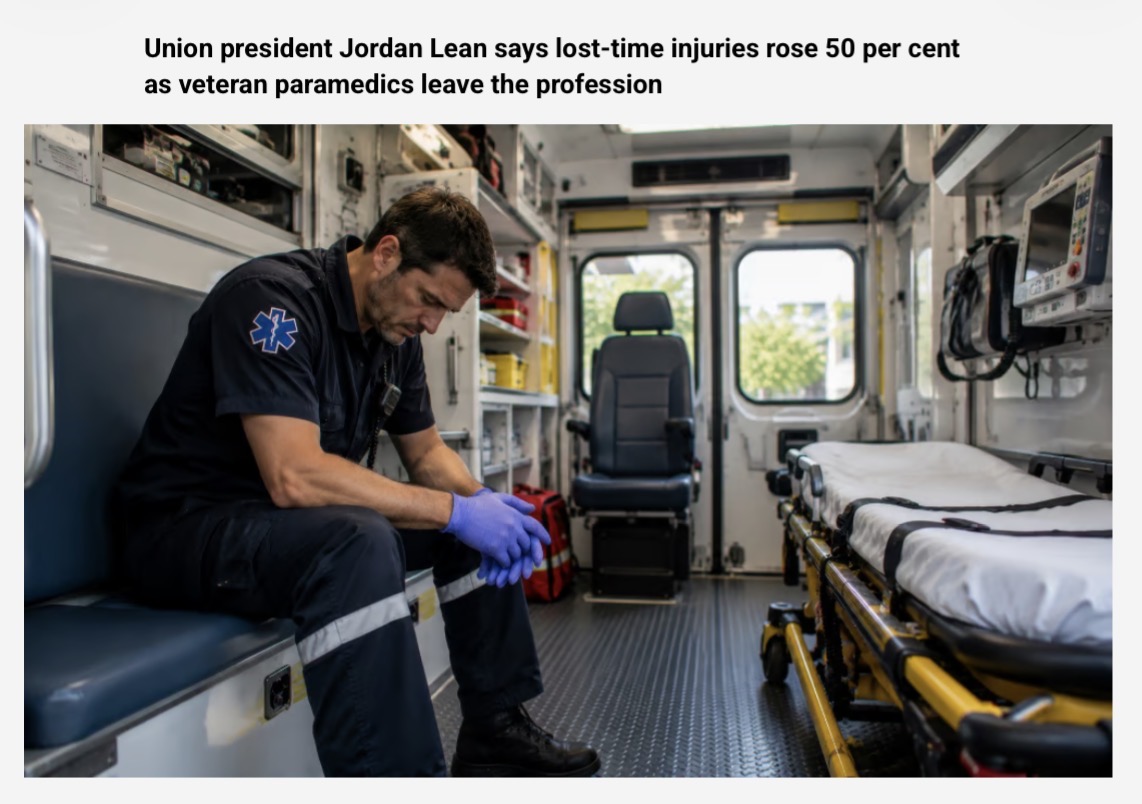
Peterborough paramedics say psychological injury, inadequate mental-health coverage and staff departures are putting their service under increasing strain. At some point, employee wellness becomes public safety.
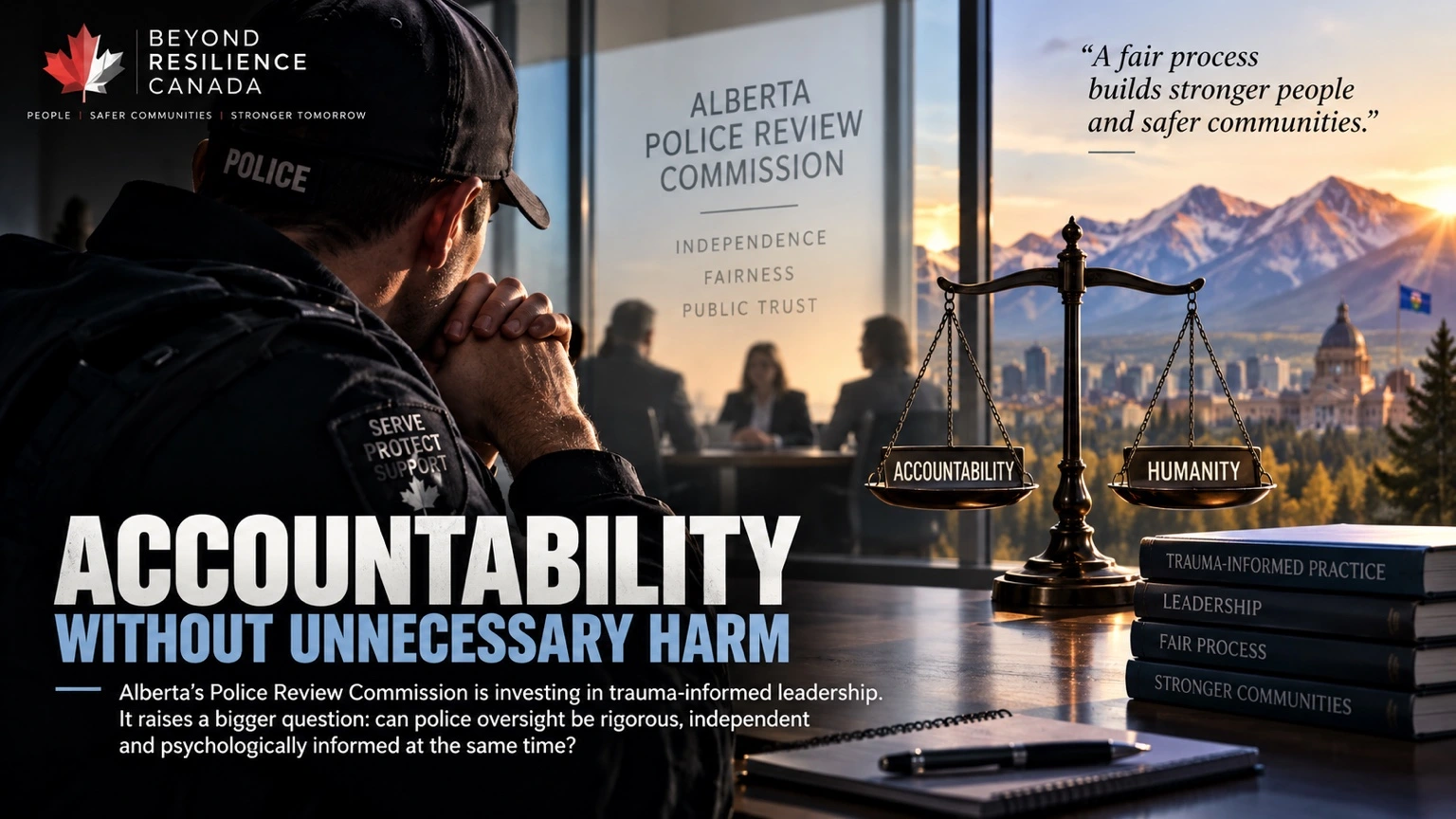
Alberta’s Police Review Commission is investing in trauma-informed leadership. It raises a bigger question: can police oversight be rigorous, independent and psychologically informed at the same time?
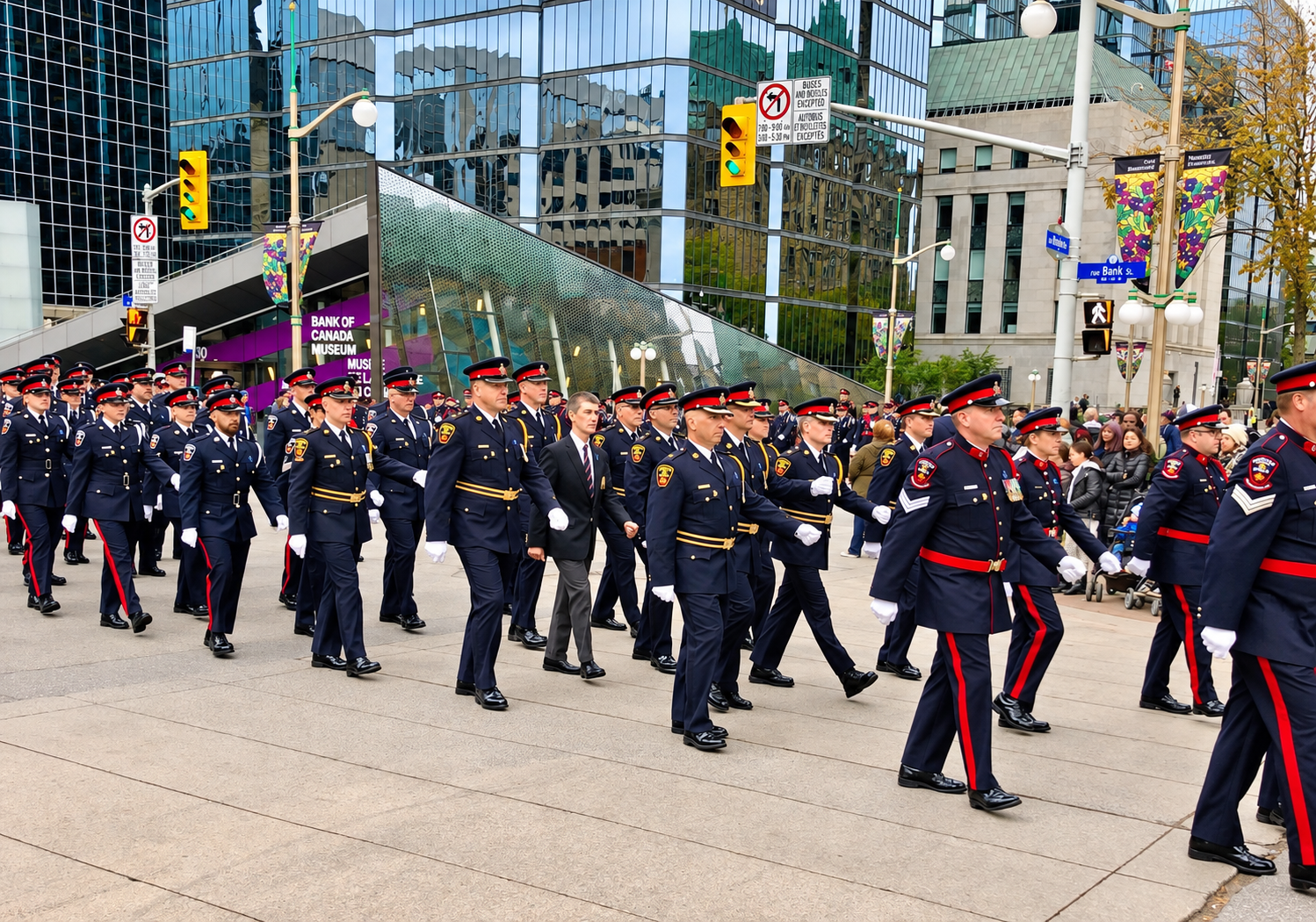
Commemorative police parade · Supplied photo, AI enhanced
For those of us who have spent our lives in policing and public safety, this day is deeply personal.
The names engraved on memorials are not abstract.
They represent people who wore the same uniform, worked the same shifts, answered the same calls, and accepted the same responsibilities that so many others still carry today.
Over a long career, you come to understand how quickly an ordinary day can change.
A radio call.
A traffic stop.
A domestic dispute.
A person in crisis.
A routine assignment that suddenly becomes anything but routine.
And when the worst happens, the impact travels far beyond the officer involved.
It reaches the partner standing beside them.
The dispatcher listening on the radio.
The supervisor racing to the scene.
The officers who arrive moments later.
The investigators who carry the case forward.
And the families who wait at home.
I have seen firsthand how critical incidents can remain with people long after the scene has been cleared, the reports completed and the organization has moved on to the next call.
That is why today is not only about remembering names.
It is about remembering people.
Their service. Their families. Their colleagues. Their sacrifice.
And it is also a reminder that those who continue to serve deserve more than our respect after something goes wrong.
They deserve meaningful support throughout their careers.
We remember those who never came home.
And we should never forget our responsibility to those who still put on the uniform and answer the call.
Durham · Accountability · Mental health
A New Committee Is Not a New Strategy
J. Bruce Townley · Beyond Resilience Canada · Commentary
Durham Region has announced a new Police-Hospital Committee intended to improve how people experiencing mental-health and addictions-related crises transition from police into hospital care.
The objectives are worthwhile.
Clearer transitions. Better coordination. Joint training. Identification of barriers. Improved access to appropriate care.
All should be supported.
But there is an important piece of context missing from the broader conversation:
None of this begins in 2026.
Durham has been working at the intersection of policing, mental health, hospitals and community services for more than a decade.
So perhaps the most important question isn’t why another committee has been established.
It is this:
After more than ten years of collaboration, what should we already know?
We Have Been Here Before
Durham Connect was established in 2015 around a principle that was progressive at the time and remains relevant today:
Complex problems cannot be solved by one organization working alone.
Police, health care, mental-health services, education, housing, children’s services, addictions providers and community agencies came together to identify situations of acutely elevated risk and intervene before circumstances deteriorated further.
The objective was prevention.
Then came the coroner’s inquest into the death of Michael MacIsaac.
MacIsaac died following an interaction with Durham Regional Police in Ajax in December 2013.
The subsequent inquest produced recommendations addressing police response to people experiencing mental-health crises, including training, de-escalation and stronger collaboration with mental-health professionals and community partners.
I know that work personally.
At the time, I was an Inspector with Durham Regional Police and had responsibility for leading the Service’s work responding to the coroner’s recommendations.
It was difficult work arising from a tragic death.
But one conclusion was difficult to dispute:
Police could improve considerably—but policing could not fix the mental-health system.
We could improve training.
We could improve de-escalation.
We could improve supervision.
We could improve how officers recognized and responded to people experiencing crisis.
But if appropriate clinical resources were unavailable, if transitions into hospitals were inefficient, if community treatment was inaccessible or if people repeatedly returned to crisis, police would continue to become the system’s default response.
That was understood years ago.
So What Are We Solving Now?
The newly announced Police-Hospital Committee has a specific and legitimate mandate.
It will examine what happens when police bring someone experiencing a mental-health or addictions-related crisis into a Lakeridge Health emergency department.
That is important.
But in 2026, establishing a forum for police and hospitals to discuss these issues cannot itself be considered the outcome.
The committee is the mechanism. The outcomes are what matter.
And those outcomes should be measurable.
How long are police officers currently waiting in emergency departments?
What is the target for reducing that time?
How many Mental Health Act apprehensions involve repeat contacts?
Are those repeat contacts increasing or decreasing?
How many crisis calls are being successfully diverted from police?
How many people return to emergency departments shortly after a previous police apprehension?
How often does a person leave hospital without an effective connection to continuing community care?
What happens to them 30, 60 or 90 days later?
Are families experiencing a better system?
Are frontline police officers experiencing less unnecessary crisis workload?
Are paramedics spending less time transferring responsibility?
Are nurses, physicians and mental-health professionals experiencing safer and more efficient handovers?
If we cannot answer those questions, we should ask why.
Institutional Memory Matters
Public institutions have a tendency to rediscover problems.
Leadership changes.
People retire.
Programs are renamed.
Committees disappear and others are created.
Strategic plans change.
Eventually, an issue that has been examined before can begin to look new again.
That is why institutional memory matters.
Organizations should know what was recommended ten years ago.
They should know what was implemented.
They should know what worked.
They should know what didn’t.
And they should know whether the outcomes actually improved.
Otherwise, reform risks becoming cyclical:
Study. Recommend. Create a committee. Train. Reorganize. Repeat.
The people experiencing crisis deserve better than that.
So do the people responding to them.
Activity Is Not the Same as Progress
There is a fundamental difference between measuring activity and measuring outcomes.
How many meetings were held?
Activity.
How many people attended training?
Activity.
How many referrals were made?
Activity.
How many partnerships were established?
Activity.
Those numbers may demonstrate effort.
They do not necessarily demonstrate improvement.
The more difficult measures are the ones that matter.
Did fewer people reach crisis?
Did repeat apprehensions decline?
Did hospital transfer times improve?
Did people receive treatment earlier?
Did crisis diversion work?
Did police workload decrease?
Did patient and family experiences improve?
Did outcomes for first responders and health-care workers improve?
That is the difference between demonstrating that something was done and demonstrating that something changed.
There Is Also an Occupational-Health Consequence
This matters to Beyond Resilience Canada for another reason.
Every failure elsewhere in the system eventually lands somewhere.
Too often, it lands on frontline workers.
Police officers repeatedly respond to suicide risk, psychosis, addiction, self-harm and families desperately trying to obtain help.
Paramedics respond to the same crises.
Emergency physicians, nurses and mental-health clinicians receive people at the other end—often while working within crowded and heavily pressured emergency departments.
When systems do not connect effectively, these professionals absorb the consequences.
And repeated exposure becomes part of their cumulative occupational load.
That means better police-hospital coordination is not simply a patient-flow initiative.
It is also occupational mental-health prevention.
Don’t Start Again. Build Forward.
The new Durham Region Police-Hospital Committee has an opportunity to do valuable work.
It should.
But Durham should not approach this as though the conversation is beginning again.
There is more than a decade of experience to build upon.
Durham Connect.
Police-clinical partnerships.
Mental-health response teams.
Crisis diversion.
The MacIsaac inquest recommendations.
Years of operational experience involving police, paramedics, hospitals, clinicians and community organizations.
That history should be an advantage.
The next step should therefore be more ambitious than collaboration.
It should be accountability for outcomes.
Establish the baseline.
Publish meaningful measures.
Identify what has worked.
Acknowledge what hasn’t.
Set targets.
Measure again.
And report whether people’s experiences are actually improving.
Because after more than ten years, the question should no longer be:
Can police and health care work together?
We already know they can.
The question is:
Can we demonstrate that people in crisis—and the professionals responding to them—are measurably better off because they do?
5,941 Overdose Calls: When a Health Crisis Becomes a First-Responder Workload Crisis
Beyond Resilience Canada · Policy commentary
The numbers should make us stop and think.
Calgary firefighters responded to 5,941 overdose calls during the first seven months of 2026.
During the same period last year, they responded to 2,440.
That is a 143 per cent increase.
In July alone, Calgary firefighters were responding to more than 35 overdose calls every day.
Many involved firefighters administering naloxone and attempting to save a life.
This is clearly an addiction and public-health crisis.
But it is also becoming something else:
A first-responder workload and occupational-health crisis.
The Calls Do Not Happen in Isolation
When a fire crew responds to an overdose, that apparatus and those firefighters are unavailable for another emergency.
Calgary Firefighters Association President Jamie Blayney says the increase is stretching resources and can require apparatus from other districts to cover calls.
That matters when the next call is a structure fire, serious collision, cardiac arrest or another life-threatening emergency.
Seconds matter in emergency response.
But there is another consequence that is more difficult to measure.
Firefighters responding to these calls are repeatedly encountering unconscious patients, respiratory arrest, death, distressed families and circumstances where immediate intervention determines whether another person lives.
Then they clear the call.
And respond to the next one.
More Than a Staffing Problem
The obvious response to increasing emergency calls is to discuss staffing.
Staffing matters.
So do apparatus, deployment models, response times and station coverage.
But those discussions should not obscure the occupational-health dimension.
Repeated exposure to overdose and drug poisoning is not equivalent to responding to an ordinary service call.
Firefighters may perform life-saving interventions repeatedly during a single shift.
Sometimes those interventions work.
Sometimes they do not.
Either way, the cumulative exposure continues.
One difficult call may not cause psychological injury.
But repeated exposure to death, near-death and profound human distress over years of service becomes part of the occupational load firefighters carry.
That deserves to be measured just as seriously as response times and staffing levels.
Calgary Has Seen This Pressure Building
Medical response is already a major part of modern firefighting.
Calgary Fire Department reported that critical medical interventions represented 56 per cent of its calls in 2023, and poisoning and overdose emergencies had increased 40 per cent from the previous year.
The City re-established a dedicated Medical Response Unit in 2023 and added a second in February 2024 to help manage growing medical demand while keeping larger fire apparatus available for other emergencies.
Those are practical operational adaptations.
But when one category of emergency increases by 143 per cent in a year, adapting the emergency-response system cannot be the entire solution.
We also need to ask what is generating the demand.
Firefighters Cannot Solve the Drug Crisis
Firefighters should absolutely respond when someone’s life is in immediate danger.
That is not the issue.
The issue is what happens before—and after—that emergency.
When the same public-health and social conditions continually produce life-threatening emergencies, the fire service becomes the final safety net.
Firefighters arrive.
Naloxone is administered.
A life may be saved.
The crew returns to service.
But unless something changes for the individual, another emergency may follow.
And firefighters respond again.
This is similar to what Canadian policing is experiencing with mental-health calls.
When other systems cannot respond early enough, emergency services eventually inherit the crisis.
This Is Where Prevention Needs to Expand
Beyond Resilience Canada has consistently argued that occupational mental-health prevention cannot begin only after a first responder develops symptoms.
Peer support matters.
Resilience training matters.
Confidential clinical care matters.
Treatment and reintegration matter.
But none of those measures addresses the workload creating repeated exposure in the first place.
If firefighters are responding to more than 35 overdoses every day, we should be asking whether addiction treatment, outreach, housing, harm reduction, recovery services and other health interventions are effectively reducing the number of people reaching the point where 9-1-1 becomes their remaining option.
That is not an argument for one particular drug policy.
It is an argument for measuring outcomes.
Are overdose emergencies decreasing?
Are repeat calls decreasing?
Are people successfully entering and remaining in treatment?
Are emergency departments seeing fewer repeat presentations?
Are firefighters and paramedics experiencing fewer unnecessary repeat exposures?
And are emergency resources available when the next fire, collision or cardiac arrest occurs?
Those are public-health questions.
They are also public-safety questions.
Resilience Cannot Become the Answer to Everything
We should continue investing in the psychological health of firefighters.
But we should be careful not to respond to an unsustainable workload simply by asking firefighters to become better at carrying it.
Resilience cannot become the answer to every system failure.
Sometimes occupational mental-health prevention means improving peer support.
Sometimes it means better treatment.
Sometimes it means stronger leadership.
And sometimes it means examining why first responders are being exposed to the same preventable crisis thousands of times in the first place.
Calgary firefighters will continue answering the call.
That is what they do.
Our responsibility is to make sure we are doing everything possible to reduce the number of unnecessary calls they have to answer.
Supporting first responders is not only about helping them recover from what they see.
It is also about reducing how often our systems unnecessarily ask them to see it.
System design · Occupational mental health · Canada
Stop Asking Police to Carry the Whole System
Beyond Resilience Canada · Policy commentary
For years, we have asked how to make police officers more resilient to an increasingly complex workload.
We also need to ask whether we can redesign that workload in the first place.
Two developments—one in the Northwest Territories and another in Grande Prairie, Alberta—show why that question matters.
One identifies the problem.
The other offers a glimpse of what a different approach can look like.
“You Can’t Police Your Way Out of This”
Northwest Territories RCMP Chief Superintendent Dyson Smith recently delivered a straightforward message about the territory’s public-safety challenges.
If policing alone could solve the problem, he said, the problem would already have been solved.
Approximately 17 per cent of the calls N.W.T. RCMP responded to in 2025 were mental-health related, with each call taking about four hours on average.
The territorial government is now examining Yukon’s CAR 867 model, which pairs police with health professionals when responding to appropriate mental-health crises.
The concept does not eliminate police involvement.
It adds clinical expertise.
When someone says they are suicidal, police must assess immediate risk and protect life. But police officers are not clinicians.
A health professional responding alongside police may be better equipped to assess the person’s clinical needs and determine whether the individual requires apprehension or whether another form of intervention is more appropriate.
That is not replacing policing.
It is putting the right expertise beside police when the situation requires more than policing alone.
Grande Prairie Is Building Something Different
Grande Prairie provides another example.
The Grande Prairie Police Service becomes the city’s police service of jurisdiction on October 21.
As it builds its custody system, it is doing something worth watching.
The service is installing contactless biometric monitoring in eight holding cells. The technology monitors indicators including respiration and movement and can alert staff to possible medical distress.
Importantly, the technology supplements rather than replaces physical checks by staff.
But technology is only one part of the model.
Healthcare professionals will continue working inside the cellblock.
They can assess detainees, identify potential medical concerns and connect eligible individuals experiencing opioid addiction with Alberta’s Virtual Opioid Dependency Program.
And the responsibility does not necessarily end when the cell door opens.
Grande Prairie’s Mobile Outreach team can work with people leaving custody who want assistance connecting with addiction treatment, housing, healthcare and other community services.
That last piece may be the most important.
The Handoff Matters
We recently wrote about concerns in Edmonton surrounding people leaving custody without an effective transition into community services.
The principle is simple.
Moving someone out of police custody does not make their underlying problems disappear.
Neither does discharging someone from an emergency department.
Neither does transporting someone away from a public space.
If a person has significant mental-health, addiction, housing or medical needs, those needs remain after one organization’s legal responsibility ends.
Without an effective handoff, another crisis may follow.
And eventually someone calls 9-1-1 again.
Police respond.
Paramedics respond.
Emergency departments become involved.
And the cycle begins again.
This Is Also About First-Responder Mental Health
There is another reason these models deserve attention.
Every unnecessary crisis response represents occupational exposure for somebody.
Police officers repeatedly encounter suicide risk, psychosis, addiction, overdose, violence, homelessness and profound human distress.
Paramedics and emergency-department professionals encounter much of the same human suffering from a different perspective.
One encounter may not result in psychological injury.
But repeated exposure over a 20- or 30-year career contributes to cumulative occupational load.
We cannot eliminate that exposure from public-safety work.
But we should not unnecessarily create more of it because our systems are poorly connected.
Resilience Cannot Be the Entire Strategy
There is enormous value in resilience training.
There is enormous value in peer support, confidential clinical care, reintegration programs and treatment for occupational psychological injuries.
We need all of them.
But there is a danger in treating resilience as the solution to every organizational problem.
If someone is carrying too much weight, we should help them become stronger.
But we should also ask whether they need to be carrying all of that weight in the first place.
That distinction matters.
Occupational mental-health prevention is not only about strengthening the individual. It is also about improving the system around them.
Build Prevention Into the System
Grande Prairie has an unusual opportunity.
It is building a new police service and therefore has the ability to design systems before decades of organizational practices become entrenched.
Healthcare inside custody.
Technology capable of identifying medical distress.
Connections to addiction treatment.
Mobile outreach after release.
Integrated public-safety communications.
None of these initiatives alone will solve the complex relationship between policing, mental illness, addiction, homelessness and community safety.
And they should be evaluated carefully.
We should measure whether medical emergencies are identified earlier.
And ultimately whether outcomes improve for both the people receiving services and the professionals providing them.
That is how promising ideas become evidence-informed practice.
A Different Question
Canadian policing has spent considerable time asking:
How do we make our people more resilient?
It remains an important question.
But it cannot be the only one.
We should also ask:
How do we build better systems so our people do not have to absorb every failure elsewhere in the system?
The Northwest Territories is recognizing that police alone cannot solve problems rooted partly in health and social conditions. Grande Prairie is building clinical care and continuity into its emerging public-safety model.
Those approaches deserve careful evaluation.
Because supporting police officers and other first responders should never mean simply teaching them how to carry more.
Sometimes prevention means giving them less unnecessary weight to carry.
Mental-health response · British Columbia · System design
173 Mental-Health Files in Three Months
Beyond Resilience Canada · Policy commentary
Cranbrook RCMP responded to 173 mental-health files between April and June 2026.
The detachment’s second-quarter report records 2,201 reports to police overall. Mental-health files therefore represented nearly eight per cent of the quarter’s reported workload—and an average of almost two responses every day.
The quarter-to-quarter increase is significant: 173 files compared with 132 in the first three months of 2026, an increase of approximately 31 per cent. The longer comparison is equally important. Cranbrook recorded 236 mental-health files in the same quarter of 2025, so the new figure does not establish a year-over-year increase.
Both facts matter. Demand can fluctuate, but the continuing volume shows that mental-health crisis response is a substantial and recurring part of frontline police work.
Each file may involve a person in distress, family members trying to help, health-care partners and officers making consequential decisions under pressure. For police personnel, repeated exposure to crisis, suicide risk, trauma and uncertainty can create cumulative occupational strain even when no single call becomes a critical incident.
Cranbrook and other Southeast District detachments adopted HealthIM earlier this year in collaboration with Interior Health. The digital tool supports standardized risk assessment and the secure sharing of clinically relevant information with emergency departments. That is a practical improvement in coordination and continuity of care.
Technology, however, cannot replace service capacity. Communities still need timely clinical response, clear hospital handoffs, appropriate non-police alternatives, follow-up after the immediate crisis and coordinated tables that address repeated risks before they become emergencies.
Police leaders should also treat this demand as a workforce-health issue. Useful measures include not only the number of files, but officer-hours, hospital wait times, repeat contacts, use-of-force exposure, missed breaks, overtime and access to confidential support after difficult calls.
The goal is not to remove police from every mental-health call. It is to ensure that police attend when safety requires them, health professionals lead when clinical care is needed, and neither the person in crisis nor the responder is left carrying a system gap alone.
A quarterly total of 173 files is more than a workload statistic. It is a system-design signal—and an occupational-health responsibility.
In a crisis: If you or someone you know is in immediate distress, call or text 9-8-8 in Canada. If there is immediate danger, call 9-1-1.
Critical incidents · Ontario · Police wellbeing
Yet Another Officer Shot. The Duty of Care Starts Now.
Beyond Resilience Canada · Statement and policy commentary
UPDATE —
The Belleville Police officer seriously injured in Sunday’s shooting has now been identified as Const. Jeff Smith, a 13-year veteran of the Belleville Police Service.
Const. Smith continues his recovery. His wife, Ashley, has described what happened as the darkest and most frightening day their family has experienced and says Jeff has a “very long, difficult road ahead.”
Belleville Police has thanked the community for the extraordinary support shown to Const. Smith and his family and has asked that their privacy be respected as they focus on his recovery.
The 29-year-old man involved in the exchange of gunfire died in hospital on September 21. Ontario’s Special Investigations Unit continues its independent investigation into the police interaction.
These developments reinforce the central point of this story:
The critical incident may last seconds. Recovery may take months—or longer.
Duty of care cannot therefore be measured by what an organization provides during the first 24, 48 or 72 hours after an incident.
It must include sustained access to qualified clinical care, appropriate operational recovery, confidential follow-up, practical support for families and continued access to assistance for as long as it is reasonably required.
It should also recognize that the impact can extend beyond the injured officer—to the second officer involved, dispatchers, supervisors, paramedics, investigators and colleagues who responded or continue to carry responsibilities arising from the incident.
Const. Smith’s recovery belongs first to him and his family. Their privacy should be respected.
But there is a broader responsibility for policing and public-safety organizations:
When we ask officers to move toward danger, our responsibility to them cannot diminish once the danger has passed.
Belleville Police Constable Jeff Smith, a 13-year member of the service, was shot and seriously injured Sunday evening while serving his community. Police reported that he was in stable condition in intensive care, with a significant recovery ahead.
According to police and the Ontario Special Investigations Unit, the officer encountered a man near the Sons of Jacob Synagogue at approximately 7:10 p.m. An exchange of gunfire followed. The officer and the man were taken to hospital; the man was reported to be in life-threatening condition.
The SIU is investigating. Police said there was no continuing threat to public safety. Authorities have not established publicly what led to the encounter or whether the synagogue or Jewish community was targeted. Those questions must be answered through evidence, not speculation.
Yet another police officer has been shot and seriously injured while serving his community. Beyond Resilience Canada wishes Constable Smith a full recovery and extends its support to his family, colleagues and the Belleville community.
The immediate priorities are medical care, public safety, evidence preservation and an independent investigation. The organization’s duty of care must also begin now—not after the investigation ends and not only if the officer asks for help.
A police shooting affects more than the injured officer. The officer’s partner, supervisors, dispatchers, paramedics, investigators, witnesses and family members may each carry part of the event. In a smaller police service, the impact can travel quickly through the entire organization.
An evidence-informed response should be automatic, confidential and sustained. It should include practical support for the family, prompt access to a qualified and independent clinician, appropriate operational relief, peer support that complements clinical care, proactive follow-up and a safe, supported return to work.
Independent oversight and employee support serve different purposes. Providing care does not prejudge the officer’s actions or the SIU’s findings. It recognizes that exposure to gunfire and serious injury can carry psychological consequences regardless of the eventual legal conclusions.
Leaders should not place the burden on an injured officer or family to navigate benefits, arrange care or repeatedly explain what they need. A clear response protocol should already exist, and someone with authority should remain accountable for making it work.
We ask police officers to move toward danger. When one is injured, the duty to protect that officer and family should be just as immediate and deliberate.
System design · Canada · Police and community wellbeing
When Mental-Health Care Becomes Police Work
Beyond Resilience Canada · Policy commentary
Across Canada, police are increasingly used as the default response when mental-health and community-care systems cannot respond.
Recent reporting from the Northwest Territories and Steinbach, Manitoba, shows the scale of that shift. In the Northwest Territories, RCMP responded to more than 7,300 mental-health calls in 2025—nearly one in five calls—requiring approximately 30,000 officer-hours. In Steinbach, local RCMP were handling more than one Mental Health Act call each day.
Different communities, the same system problem: when the system lets go, police pick it back up.
Police have a vital role when a crisis involves an immediate safety risk, violence, weapons, a missing person or another threat to the public. But a badge and a uniform cannot substitute for sustained clinical assessment, treatment, housing, addictions care and follow-up.
Every non-criminal crisis directed to police also draws time from other public-safety work. It repeatedly exposes officers to acute distress, suicide risk, unpredictable behaviour, family trauma and decisions that may carry serious consequences for everyone involved.
Over time, that exposure can contribute to fatigue, frustration, moral strain and psychological injury—especially when officers repeatedly encounter the same people because the underlying need remains unresolved.
A transfer to hospital does not automatically end the police role. Long waits and unclear handoffs can keep officers away from their communities for hours while a person in crisis waits for care.
The answer is not simply to stop sending police. Communities need a risk-based model: trained health or community responders for appropriate calls; police support when safety requires it; prompt clinical handoffs; and continuity after the immediate crisis has passed.
Governments and public-safety leaders should measure the demand honestly. That means tracking mental-health calls, officer-hours, hospital wait times, repeat contacts, successful connections to care and outcomes for both the person in crisis and the responders involved.
The data should then be used to build capacity where it is missing—not merely to document how often police compensate for the gap.
Police should remain available when public safety requires them. They should not become the substitute for a mental-health system that was unavailable.
In a crisis: If you or someone you know is in immediate distress, call or text 9-8-8 in Canada. If there is immediate danger, call 9-1-1.
System design · Alberta · Community and responder wellbeing
Release From Custody Requires a Handoff—not Simply a Drop-Off
Beyond Resilience Canada · Policy commentary
The end of legal custody does not necessarily mean the end of vulnerability, risk or need.
CityNews reported this week on anger in Edmonton’s Chinatown after surveillance video showed a Correctional Services van leaving a released detainee in the neighbourhood. Community leaders and business owners questioned why people were being brought into the area without an apparent connection to services.
Edmonton Police Chief Warren Driechel acknowledged that police also transport people from other parts of the city to Chinatown because shelters and charities are concentrated there. He said the system needs a better handoff rather than a simple drop-off and identified limited capacity as part of the problem.
That distinction matters. Transportation is not a transition plan.
A responsible release should identify where the person can safely go, whether a service has agreed to receive them, what immediate health or substance-use needs exist, how prescribed medication and identification will be managed, and who is responsible if the plan fails.
Without that coordination, a person may be left on the street without meaningful support. Residents and local businesses absorb the visible consequences. Police officers are then called to manage a situation created partly by gaps between corrections, health care, addictions services, housing and community supports.
This cycle also has an occupational impact. Officers may repeatedly encounter the same people in crisis, often with few practical options beyond short-term stabilization, transport or another arrest. Repetition without resolution can contribute to frustration, moral strain and preventable exposure to conflict and trauma.
The solution is not to move the drop-off point to another neighbourhood. Nor should one community be expected to carry a disproportionate share of a regional system’s failures.
Alberta should establish a clear release-and-transfer protocol shared by corrections, police, health services, shelters and community providers. It should require confirmed reception when support is needed, safe transportation, timely information-sharing within privacy law, after-hours options and a process for responding when no placement is available.
Results should be measured: successful connections to service, repeat police contacts, emergency-department use, returns to custody and the experiences of released people, frontline workers and affected communities.
No single agency can resolve homelessness, addiction, mental illness or reintegration alone. Each agency can, however, be accountable for the quality of the handoff it controls.
A system should not call a release complete when responsibility has merely been transferred to the street.
Mental-Health Support Should Not Depend on Informal Arrangements
Beyond Resilience Canada · Policy commentary
People who respond to emergencies in Canada’s national parks may face wildfires, search-and-rescue operations and medical emergencies—often in remote locations with limited backup.
The Public Service Alliance of Canada says its bargaining team has proposed improved mental-health support and leave for employees who experience critical incidents. The union identifies park wardens, wildland firefighters and visitor-safety personnel among employees who perform first-responder duties.
These are bargaining proposals, not agreed contract terms. PSAC says Parks Canada has not yet responded to most of its outstanding demands and that negotiations are scheduled to resume December 2–3.
Beyond Resilience Canada takes no position on the broader labour negotiations. The proposal does, however, raise an important policy question: what should an organization be required to provide after a foreseeable occupational exposure?
Support after a critical incident should not depend on whether an employee has an understanding supervisor, knows whom to call or feels able to ask for an exception. Those conditions produce uneven access precisely when clear support matters most.
A defined response should include prompt operational relief, confidential access to a qualified and independent clinician, appropriate recovery time, follow-up and a safe, supported return to work. In remote settings, the plan must also account for distance, limited local services and continuity of care.
Peer support can provide valuable connection and practical guidance, but it should complement—not replace—professional assessment and clinical care. Employees should also be protected from unnecessary disclosure of personal health information.
Employers should evaluate whether these supports are timely, accessible and effective without compromising individual privacy. A policy on paper is not enough if employees cannot use it safely in practice.
The principle extends beyond Parks Canada. Police officers, firefighters, paramedics, emergency communicators, correctional personnel, search-and-rescue teams and wildland firefighters all work in roles where critical incidents can be anticipated even when their timing cannot.
Collective bargaining will determine the wording and scope of any provision at Parks Canada. The broader responsibility should already be clear.
Where occupational exposure is foreseeable, support should be foreseeable too.
30,000 Hours in Hospital: When Police Become Part of the Mental-Health System
Beyond Resilience Canada · Policy commentary
When a person in crisis arrives at hospital with police, the need for care does not end at the emergency department doors. Neither does the responsibility carried by the people helping them.
Brampton’s September 15 release reports that Peel police spent over 30,000 hours waiting in hospitals on mental-health calls during January 2020–June 2024. Separately, it reports 24,027 apprehensions involving 17,726 people during January 2022–July 2026. These are different reporting periods, not annual totals.
The City presented these figures while advocating for an involuntary-care pilot. BRC’s focus here is the human impact of crisis response and hospital delays.
Behind those hours are people in distress, families waiting for answers, officers maintaining safety and medical teams trying to provide care.
For police officers, a hospital wait can involve sustained vigilance, de-escalation and responsibility for someone whose condition may change. It can also extend the demands of a difficult call while other calls continue to accumulate.
Returning repeatedly to the same person in crisis may leave an officer questioning whether the available response is producing lasting help. Concern, frustration and a sense of limited options can become part of the work.
The impact on nurses, physicians and other hospital staff deserves equal attention.
Medical teams must balance urgent clinical needs, competing patients, available space and safe care. When appropriate follow-up services are difficult to arrange, the pressure can continue beyond the immediate assessment.
A faster police handover is not a complete solution if it simply transfers an unmanageable workload to a nurse, physician or hospital security team.
Patients, too, need more than a shorter wait. They need dignity, clear communication, timely assessment and a realistic pathway to ongoing support.
The published counts do not measure burnout, PTSD or other psychological outcomes among staff. BRC’s concern is that prolonged responsibility, repeated crisis exposure and barriers to appropriate care can create conditions that warrant occupational-health attention.
We should examine those conditions directly rather than assume that the people managing them can absorb unlimited pressure.
This is a shared system-design challenge.
Police services, hospitals, community providers and governments should agree on clear handover responsibilities, appropriate staffing, safe assessment spaces and reliable connections to community care. Where clinically appropriate and safe, alternatives to police-led response and emergency-department attendance should be evaluated.
Progress should be measured across the whole pathway: time to assessment, safe transfer of responsibility, repeat crisis contacts, access to follow-up, patient experience and the effect on both police and health-care workloads.
Staff also need confidential clinical support, time to recover after difficult incidents and leaders who act on recurring operational pressures. These should accompany improvements in service design.
Any proposal involving involuntary care requires its own careful assessment of evidence, rights and clinical safeguards. The time police spend waiting cannot, by itself, settle that debate.
Beyond Resilience Canada’s position is straightforward: protecting the people who respond to crisis includes improving the systems in which they work.
Better care for the person in crisis and better protection for those providing that care should advance together.
Treatment research · Canada · Occupational mental health
PTSD Treatment Research: Hope Must Be Matched by Evidence
Beyond Resilience Canada · Policy commentary
New treatment research deserves attention. For people living with occupational psychological injury, it also deserves careful scrutiny.
On September 16, Optimi Health announced a planned Phase 3 Canadian trial of MDMA-assisted therapy for PTSD, expected in 2027. The company says Health Canada has authorized the trial, which would enrol up to 100 veterans and frontline workers, including police, firefighters and paramedics.
Optimi says safety and effectiveness remain under investigation and its MDMA products have no Health Canada market authorization. Permission to conduct a trial is not approval for routine treatment.
That distinction should remain clear whenever this research is discussed publicly.
Beyond Resilience Canada supports rigorous research that could expand effective care. Our interest is in the quality of the evidence, the protection of participants and what the results may eventually mean for people seeking help.
Hope should be matched by evidence and safeguards.
For BRC, credible research should include meaningful informed consent, careful clinical screening, qualified supervision, transparent reporting of adverse events and follow-up that examines whether improvements last. Independent scrutiny matters, including scrutiny of commercial interests.
Participants should understand the uncertainties and be free to decline or withdraw without pressure from employers, insurers or anyone involved in their career decisions. Confidentiality and clinical independence must remain central.
An announcement cannot answer the questions that a completed study is intended to examine. Who benefits? Who does not? What harms occur? How do outcomes compare with other care? What support is needed afterward?
Those are the questions that should guide the discussion as the research develops.
At the same time, employers and governments should continue improving access to care now. Future treatment possibilities cannot become a reason to delay confidential clinical support or the work of preventing psychological harm in the workplace.
Better treatment research and safer working conditions belong in the same conversation.
People who serve deserve both credible hope for the future and practical support in the present.
Winnipeg is moving toward a different way of responding to thousands of mental-health, addictions and lower-risk crisis calls—and the approach deserves attention across Canadian public safety.
On September 15, Winnipeg's Executive Policy Committee approved a framework for the Winnipeg Community Crisis Response model.
The concept is straightforward: when a 9-1-1 call does not require police, fire or emergency medical intervention, trained community crisis responders may be better positioned to provide the appropriate response.
An independent review commissioned by the City identified more than 10,000 calls each year that could potentially be handled through an alternative community response.
That includes approximately 3,855 Winnipeg Police Service calls representing nearly 8,000 hours of officer time, along with 6,356 Winnipeg Fire Paramedic Service calls.
The concept is already being tested.
Between July and September 14, a partnership involving Winnipeg Fire Paramedic Service and the Downtown Community Safety Partnership handled 647 dispatches, including 493 originating through 9-1-1.
The proposed citywide model would provide crisis intervention, de-escalation, stabilization and connections to other supports.
Calls involving immediate threats to safety or requiring police, fire or emergency medical intervention would continue to receive the appropriate emergency response.
That distinction matters.
Police officers, firefighters and paramedics will always have an essential role in responding to emergencies and situations where there is an immediate risk to someone's safety.
But not every person experiencing a mental-health, addictions or social crisis requires a police officer, fire crew or ambulance.
Sending the right professional to the right call can improve the response for the person seeking help while preserving emergency resources for situations that actually require them.
There is another important benefit.
Reducing unnecessary exposure is also an occupational mental-health strategy.
First responders experience repeated exposure to crisis, trauma, conflict and human suffering throughout their careers. We rightly invest in treatment, peer support, resilience, reintegration and post-critical-incident care.
Those supports matter.
But prevention should also include examining whether our systems are unnecessarily exposing first responders to situations where another trained professional could provide a more appropriate response.
Reducing avoidable workload can create more time for recovery between difficult calls, improve availability for genuine emergencies and potentially reduce some of the cumulative occupational stress carried across a career.
Alternative crisis response should not be viewed as replacing police, firefighters or paramedics.
It is about using each resource where its skills are most appropriate.
Winnipeg's model will still need careful evaluation. Response times, client outcomes, repeat calls, safety incidents, transfers back to emergency services and the actual effect on frontline workload should all be measured transparently.
But the principle is worth examining nationally.
Supporting first responders is not only about helping them recover from difficult work. It is also about designing public-safety systems that reduce unnecessary exposure to it.
The proposal will now proceed to Winnipeg City Council for final approval.
Today, on Firefighters’ National Memorial Day, we remember the firefighters who lost their lives in the line of duty serving communities across Canada.
Behind every name is a life, a family, colleagues and a community forever changed.
The 23rd Canadian Firefighter Memorial Ceremony is being held today at the Canadian Firefighter Memorial in Ottawa, bringing together families and members of the fire service from across the country to honour the fallen.
We remember their courage, their service and their sacrifice. We also recognize the families, friends and colleagues who continue to carry their loss.
As we honour those who died, we must also remain committed to protecting the physical and psychological health of the firefighters who continue to serve.
RCMP Creates Permanent Memorials for Employees Lost to Suicide
Beyond Resilience Canada · Commentary
Content note: discussion of suicide.
The RCMP has taken an important step in acknowledging the human impact of suicide within policing.
On World Suicide Prevention Day, Alberta RCMP unveiled a permanent memorial plaque outside K Division Headquarters in Edmonton honouring RCMP employees who have died by suicide.
The memorial is one of 15 plaques installed across the country, creating permanent places for colleagues, families and friends to remember those who have been lost.
Alberta RCMP Commanding Officer Deputy Commissioner Trevor Daroux said the memorial is both an opportunity to remember and a reminder of the responsibility to create an environment where employees feel safe seeking help and where mental health is treated with the same importance as physical health.
That message matters.
For too long, suicide within policing and public safety was something organizations struggled to speak about openly. Recognition can help reduce silence, acknowledge the experiences of families and colleagues, and ensure that those who died are remembered for their lives and service—not simply for the circumstances of their deaths.
But remembrance must also strengthen prevention.
Permanent memorials should stand alongside confidential access to qualified clinical care, psychologically safe workplaces, meaningful peer and family support, effective postvention after a death, and leadership that recognizes when organizational conditions may be contributing to psychological harm.
Beyond Resilience Canada supports the RCMP’s decision to create permanent places of remembrance across the country.
The most meaningful way to honour those we have lost is not only to remember them, but to continue building systems that better protect those who are still serving.
Beyond Resilience Canada
In a crisis: If you or someone you know is in immediate distress, call or text 9-8-8 in Canada. If there is immediate danger, call 9-1-1.
World Suicide Prevention Day · Canada · Public safety
World Suicide Prevention Day: Awareness Must Lead to Prevention
Beyond Resilience Canada · Statement
Content note: discussion of suicide.
World Suicide Prevention Day is an important opportunity to speak openly about suicide, reduce stigma and remind people that help is available.
But awareness, by itself, is not prevention.
For police officers, military personnel and other trauma-exposed public-safety professionals, suicide prevention must include timely and confidential clinical care, adequate treatment benefits, continuity of care, safer workplace conditions and meaningful support after a death.
Current National Defence material underscores this broader responsibility. It reports that mental illness and/or workplace problems were present in more than 50% of Regular Force members who died by suicide in 2024. It also identifies a clear role for leaders in monitoring wellbeing, encouraging care and fostering supportive, stigma-free environments.
The Canadian Armed Forces are not policing, but the lesson applies across trauma-exposed occupations: workplace factors and organizational responses matter.
Employers should not wait for a person to reach a crisis. Prevention means addressing workload, trauma exposure, bullying, moral injury, unsafe leadership practices and barriers to independent clinical care before those pressures become catastrophic.
Confidentiality is essential. People are more likely to seek help when they can access qualified clinicians without fearing unnecessary disclosure, reputational harm or damage to their careers.
Organizations also need credible postvention plans. After a suicide, colleagues and families require timely support, clear communication and protection from avoidable additional harm.
Leadership accountability must be part of the conversation. Organizations should measure more than program participation or return-to-work rates. They should examine trust, access to care, treatment continuity, failed returns, sustained recovery, psychological safety and whether workplace risks are actually being reduced.
On World Suicide Prevention Day, the message should be more than “reach out.” It should also be: leaders, employers and governments must create conditions in which people can receive help early, safely and without sacrificing their dignity or careers.
Beyond Resilience Canada is an independent, non-partisan initiative focused on strengthening occupational mental health and psychological safety within policing and public safety.
In a crisis: If you or someone you know is in immediate distress, call or text 9-8-8 in Canada. If there is immediate danger, call 9-1-1.
RCMP Moves Toward Structured Post-Incident Care and Reintegration
Beyond Resilience Canada · Policy commentary
The RCMP has outlined significant changes to the way it supports members following critical incidents—changes that reflect an important shift from expecting individuals simply to cope toward greater organizational responsibility for psychological health.
In an article published September 8, the RCMP described several initiatives intended to strengthen its response to occupational stress and psychological injury.
Following a critical incident, the RCMP continues to require an occupational-health assessment within 72 hours. Its approach to group debriefing has also evolved. Rather than requiring members to relive an incident collectively, sessions now focus more on education, emotional support and recognizing potential stress reactions.
The RCMP is also implementing an Operational Stand Down protocol. Under the new approach, a supervisor may temporarily remove an officer from operational duties for up to 14 calendar days following a critical incident so the member can focus on physical and psychological wellbeing.
Another significant development is the expansion of the National Reintegration Program.
Initially piloted in Alberta in 2015, the program was expanded across Canada between 2022 and 2024. It supports officers following traumatic or critical incidents and members returning gradually after extended absences.
The RCMP reports that 88% of program participants return to operational duty.
The organization is now finalizing a national policy intended to make participation in reintegration mandatory following critical incidents or a graduated return to work after an absence exceeding one year.
This is a positive step. But implementation will determine whether these changes translate into better outcomes for members.
A return to operational duty is important—but it cannot be the only measure. Organizations should also examine sustained recovery, continuity of clinical care, confidentiality, employee trust, psychological safety, unsuccessful or repeated returns to work, workplace conditions and whether members remain healthy months and years after returning.
Mandatory participation also requires a careful distinction between mandatory access to support and mandatory disclosure of personal psychological information. Members can reasonably be required to participate in a structured reintegration process while still retaining appropriate clinical confidentiality and control over sensitive health information.
The RCMP’s recognition of another issue is particularly important. Following officer-involved shootings and other serious incidents, members can face lengthy external investigations, limited information and significant public scrutiny. The RCMP acknowledges that this uncertainty and silence can compound the original trauma.
Psychological injury does not always result from one traumatic event. It can develop through cumulative exposure—and can be aggravated by what happens organizationally after the incident.
The RCMP is also developing a three-year Workplace Wellbeing Roadmap, signalling that psychological health is increasingly being treated as a continuing organizational responsibility rather than a short-term response to crisis.
The objective should not merely be getting members back to work. It should be helping them recover, remain well and continue healthy careers wherever possible.
Beyond Resilience Canada is an independent, non-partisan initiative focused on strengthening occupational mental health and psychological safety within policing and public safety.
Content note: discussion of suicide and a fatal police interaction.
1. Critical incidents require continuing care
On September 4, ASIRT announced an investigation into a fatal police interaction at an Edmonton hotel. Its preliminary account describes officers negotiating for about 30 minutes with a man holding scissors before less-lethal options reportedly failed and he advanced toward police. The investigation remains active, and no conclusion about officer conduct is appropriate. The incident illustrates why confidential, clinically informed post-incident care should be automatic and continuing—not dependent on visible symptoms or crisis.
2. Psychological safety extends beyond criminal law
A separate ASIRT decision concerned an Alberta Sheriffs peace officer who acknowledged creating AI-generated intimate images of women, including coworkers. ASIRT determined that charges were unavailable under the law in force at the time, while characterizing the conduct as serious and harmful. Criminal law sets the threshold for prosecution—not the complete standard for a psychologically safe workplace. Employers need clear policies, confidential reporting, support for affected employees and meaningful internal accountability.
September is Suicide Prevention and Awareness Month. CIPSRT’s fall newsletter highlights the repeated trauma, access to weapons and mental-health pressures experienced by public-safety personnel, as well as their tendency to help others before themselves. Awareness matters, but it must lead to timely clinical care, adequate benefits, continuity of treatment and safer workplaces.
On September 5, teams gathered at Calgary Police Service headquarters for the seven-hour Pulling Together for Mental Health rowing event, supporting Wounded Warriors Canada programs for veterans, first responders and their families. Community initiatives build connection and awareness, but they supplement rather than replace an employer’s duty of care.
Police wellbeing requires prevention, independent care, critical-incident support, psychological safety, adequate treatment benefits and accountable leadership. The goal is not to demand unlimited resilience. It is to prevent avoidable injury, respond effectively and respectfully, support full recovery, and retain experienced members in healthy careers.
Beyond Resilience Canada is an independent, non-partisan initiative focused on strengthening occupational mental health and psychological safety within policing and public safety.
In a crisis: If you or someone you know is in immediate distress, call or text 9-8-8 in Canada. If there is immediate danger, call 9-1-1.
Commentary · Alberta · Psychological safety
Psychological Safety Does Not Begin and End With Criminal Law
Beyond Resilience Canada · Commentary
A recent Alberta investigation highlights an important distinction for public-safety organizations: conduct does not have to meet the threshold for criminal prosecution to create serious concerns about workplace psychological safety.
On September 2, the Alberta Serious Incident Response Team (ASIRT) concluded an investigation involving an Alberta Sheriffs peace officer and AI-generated intimate images of adult women, including coworkers.
According to ASIRT, the officer acknowledged creating the images using photographs obtained from social media. Investigators found no evidence that the images had been distributed or that there had been a threat to distribute them.
ASIRT determined that criminal charges were not available under the legislation in force when the conduct occurred. Canadian law governing AI-generated intimate images subsequently changed, but those amendments could not be applied retroactively.
That legal conclusion should not be confused with a finding that the conduct was acceptable.
ASIRT characterized the behaviour as serious and harmful. The matter also illustrates a broader issue for policing and other public-safety organizations: the criminal law establishes a threshold for prosecution; it does not establish the standard for a psychologically safe workplace.
Employees should reasonably expect that their colleagues, supervisors and organizations will respect their dignity, privacy and personal safety. Conduct involving coworkers can affect trust, workplace relationships and an individual’s sense of psychological safety even when it does not result in criminal charges.
For police, sheriff, corrections, fire, paramedic and other public-safety organizations, emerging technologies add another dimension to this responsibility. Policies governing harassment, professional conduct, privacy and workplace safety need to evolve alongside technologies capable of creating realistic synthetic content.
Organizations should ensure that their policies clearly address AI-generated sexual or degrading material involving colleagues, provide confidential mechanisms for reporting concerns, preserve appropriate digital evidence, support affected employees and distinguish criminal investigations from internal workplace accountability.
Occupational mental health cannot be addressed solely through treatment after an employee becomes injured.
Prevention also means creating workplaces in which dignity, trust, accountability and psychological safety are actively protected.
Beyond Resilience Canada is an independent, non-partisan initiative focused on strengthening occupational mental health and psychological safety within policing and public safety.
National resource · Canada · Public safety personnel
Unmasking suicide’s taboo in the public-safety community
Canadian Institute for Public Safety Research and Treatment (CIPSRT) Published
Content note: discussion of suicide.
During Suicide Prevention and Awareness Month, CIPSRT is calling attention to the psychological pressures carried by Canada’s public-safety personnel—and to the continuing absence of reliable national occupational-suicide data. The article encourages open conversations, early help-seeking and greater awareness of the free supports available to responders and their families.
Remembering retired Constable Mark Andrew Chappell
Oshawa Funeral Home · Family obituary
The family of Mark Andrew Chappell has announced his unexpected passing on , at age 55. Mark devoted more than 30 years to law enforcement, serving as a Police Constable with the Toronto Police Service and Durham Regional Police Service before retiring to the Sudbury area. Beyond Resilience Canada extends condolences to his sons, father, extended family, friends and former colleagues.
The obituary does not disclose a cause of death. This tribute honours his life and service without attributing a cause or a line-of-duty connection.
Police accountability, unfounded complaints and psychological safety
Beyond Resilience Canada · Commentary
An important article by Kevin Donaldson examines an often-overlooked aspect of police accountability: the impact on police officers when serious allegations are investigated and ultimately determined to be unfounded.
Accountability and independent oversight are essential to maintaining public confidence in policing. At the same time, we should recognize that lengthy investigations, uncertainty, reputational damage and concern about one’s career can have a significant psychological impact on the officer involved and their family.
An unfounded complaint is not necessarily a dishonest complaint, and that distinction is important. However, regardless of how an allegation originated, an officer who has been cleared may still carry the effects of the investigative process long after the file has been closed.
At Beyond Resilience Canada, we believe psychological health and police accountability are not competing objectives. Police organizations can maintain rigorous, independent accountability processes while also recognizing and addressing the occupational psychological stress those processes can create.
Supporting officers through an investigation does not compromise accountability. It is part of creating a psychologically safer workplace.
Opinion column urges action on police mental health and suicide
Toronto Sun · Opinion column
Content note: discussion of suicide.
The column examines the contrast between the public honours afforded to officers killed through violence and the relative silence surrounding officers lost to suicide. It includes calls from police advocates for greater openness, reduced stigma and concrete action to support members before they reach crisis.
This is an opinion column, not an independent news investigation. Beyond Resilience Canada is sharing it as part of the national policy discussion and has not independently verified every claim it contains.
Surrey Police Service · Official statement Published
Surrey Police Service announced that a member died off duty on August 23, 2026. The service said he had dedicated 33 years to policing communities across the Lower Mainland and acknowledged the loss felt by Surrey Police and his previous agency. Beyond Resilience Canada extends condolences to his family, friends and colleagues.
The member’s name and rank were not released. No cause of death was disclosed; “died suddenly” does not establish a cause or a line-of-duty connection.
Barrie Police honours Sergeant Brett Carleton’s service
BarrieToday · Kevin Lamb · News report Published
Barrie Police has announced the death of Sergeant Brett Carleton, a longtime investigator whose policing career began in 2000. The service paid tribute to his dedication and his work supporting families during difficult times. Beyond Resilience Canada extends condolences to his family, friends and colleagues.
No cause of death was disclosed in the announcement. This news item honours his service without attributing a cause.
LETTER: Recent police suicides a grim reminder of policing’s toll
BarrieToday · Ed Woodward · Letter to the editor
Content note: discussion of suicide.
Retired police officer Ed Woodward reflects on occupational trauma, barriers to support and the isolation that can follow leaving policing. His account highlights why mental-health support must extend beyond active service.
This is a personal commentary, not an independent news investigation. It discusses earlier August deaths, not a newly confirmed incident. The author’s broader statistical and political claims have not been independently verified by Beyond Resilience Canada.
Suicide ‘can’t be whispered anymore’ after police officer deaths, advocacy group says
Global News · Trevor Popoff Published
Content note: discussion of suicide.
Global News reports that three officers—from the Hamilton Police Service, Durham Regional Police Service and RCMP—died by suicide within three days. The report includes perspectives from Canada Beyond the Blue president Dilnaz Garda and former Durham officer William Woodstock on occupational trauma, stigma and gaps in support.
Correctional workers call for better mental-health support
The Canadian Press · Liam Casey · Published by Barrie360
Content note: discussion of suicide.
A Canadian Press report examines a coroner’s review of 34 confirmed suicide deaths among Ontario correctional workers between 2010 and 2024. The review makes 28 recommendations addressing mental-health care, workplace conditions and stigma. The article includes workers’ calls for expanded treatment coverage and the province’s response.