An independent Canadian policy initiative

Protecting
those who
serve.

Police mental health is a duty of care.
It is time to make that duty count.

A coordinated response to police suicide and occupational psychological injury—built on independent clinical care, safer workplaces and accountable leadership.

J. Bruce Townley August 2026

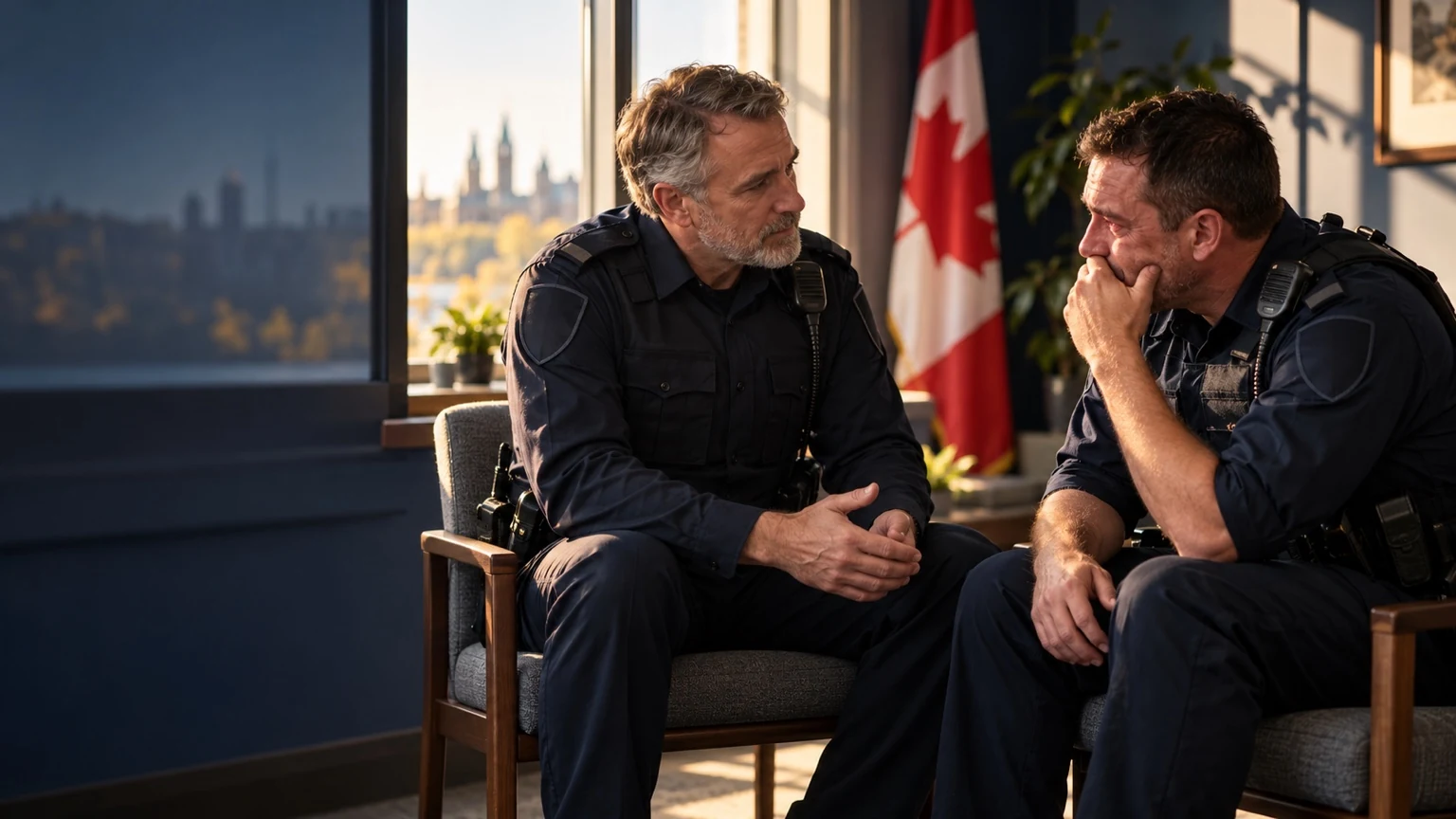
Illustrative image of a Canadian flag in warm morning light.
Care. Trust. Accountability.A national conversation.

The starting point

Three priorities.
One shared responsibility.

Support must extend from the first day of service through injury, leave and retirement—and include the families who stand beside officers.

01

Independent
clinical care.

Experienced, regulated clinicians. Confidential access outside the chain of command. Treatment that is separate from employment assessments.

02

Prevention.
Protected treatment.

Routine psychologist appointments, clinician-held baselines and continuing care without arbitrary benefit caps. Safer work must accompany training.

03

Accountability
that can be measured.

Standardized reporting, independent inspections and transparent results. Clear boundaries between operational command and clinical judgment.

These are policy recommendations, not a statement of uniform existing law or guaranteed service availability.

The policy foundation

Beyond Resilience.

A Coordinated Government Response to Police Suicide and Occupational Mental Health in Canada

The case for change, the responsibilities of each order of government, and the safeguards that make honest help-seeking possible.

Prepared by J. Bruce Townley · August 2026

From principle to practice

What needs
to change.

Six connected reforms. Explore each recommendation, or read the complete argument in the white paper.

Open the full paper

Across Canada

Every order of government.
A part to play.

A national direction must translate into practical commitments in every jurisdiction.

Federal
Coordinate strategy, protect national reporting, fund research and clinician access, and develop model legislative standards.
Provincial & territorial
Set care and compensation standards, protect treatment records, require prevention programs and independent inspections.
Municipal & police boards
Fund safe staffing, address workplace risks and make psychological safety part of leadership accountability.
Indigenous governments & partners
Co-develop culturally grounded care and secure stable, equitable support, including for remote police services.

News & updates

News.

Articles and updates on first responder mental health, prevention and accountability.

No news articles have been posted yet. Please check back for updates.

In remembrance

Honouring their lives.
Remembering their service.

For first responders across Canada who have died by suicide, during service or in retirement.

We remember police officers, firefighters, paramedics, emergency communications personnel and fellow first responders. We honour the lives they lived, the people they loved and the contributions they made to their communities.

Each person was more than their uniform, their role or the circumstances of their death. Their lives hold meaning beyond their service, and their memory belongs first to those who knew and loved them.

To the families, friends and colleagues grieving: your loss matters. This space offers remembrance with compassion, dignity and respect for your privacy.

A remembrance guided by families

This is a collective tribute, not a complete record of lives lost. Individual names, photographs and stories will only be included after information is verified and the family or an authorized representative has given explicit consent, including consent to identify the death as suicide. Choosing privacy will always be respected.

Find support resources

Experience behind the proposal

A policing perspective.
A human responsibility.

J. Bruce Townley

Retired Police Inspector · 32 years in Canadian policing

Bruce’s career with Durham Regional Police Service spanned frontline service, investigations and senior command. His experience of leadership and recovery from an occupational psychological injury informs this proposal.

This initiative is independent and non-partisan. It advances practical reforms to strengthen policing and protect the people who serve—not to speak on behalf of a police service, government or professional association.

Move the conversation forward

Put this on
the agenda.

Share the one-page brief with your police board, association or elected representative. Ask what standards are in place, how results are measured, and which gaps need action.

A useful starting question: what would it take to make independent care, protected treatment and transparent accountability the standard?

Download the one-page brief

Read further

Evidence, context
and existing resources.

The full paper contains the research and Canadian legal references behind the recommendations. Links below are resources, not endorsements of this initiative.